Oriental Rug Cleaning in Columbia for Persian, Wool and Silk Rugs
Persian, tribal and other hand-knotted rugs get dye tests, a shampoo matched to the fiber and a cool, cascading rinse at the Maxcare Rug Studio, a WoolSafe Approved Service Provider.
Get a Quote
Tell us what needs cleaning and we'll call you back with a quote. Rather pick a time yourself? Book online.
- 100% satisfaction guarantee
- WoolSafe Approved Service Provider
Oriental & Wool Rug Cleaning
What makes oriental rug cleaning different from cleaning other rugs?
Oriental rug cleaning starts with the wool and its dyes, not the dirt. Wool is an acid fiber, usually colored with acid dyes, so the wrong cleaner or pH works against both. We test each color, use a shampoo made for that fiber, and leave the rug slightly acid, where wool and its dyes are happy.
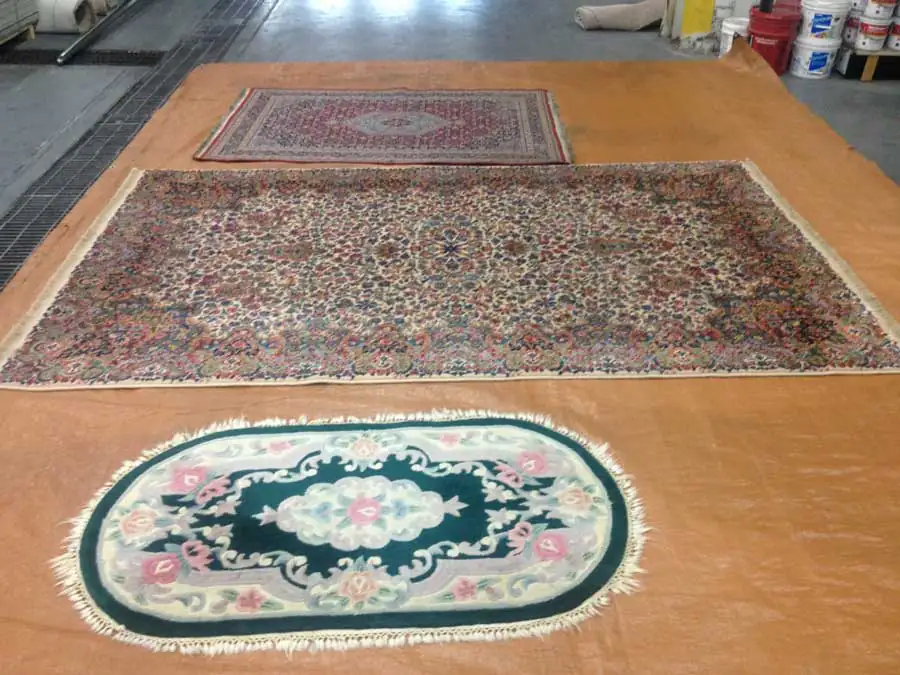
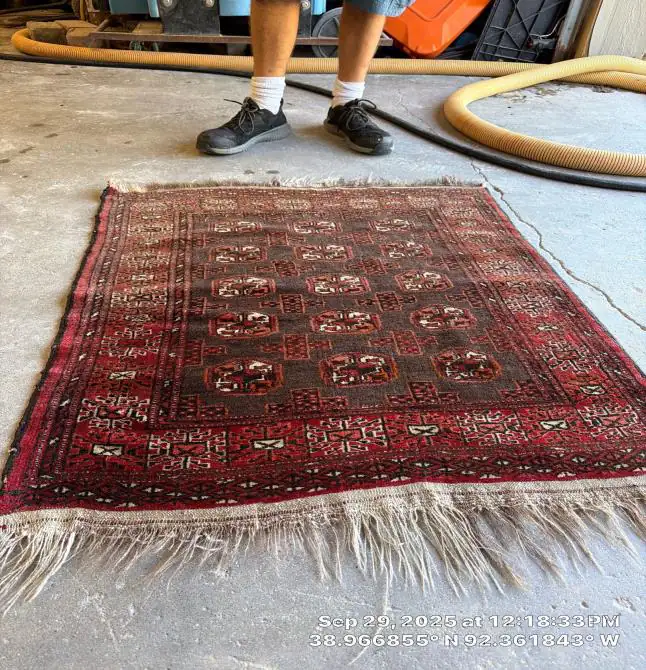
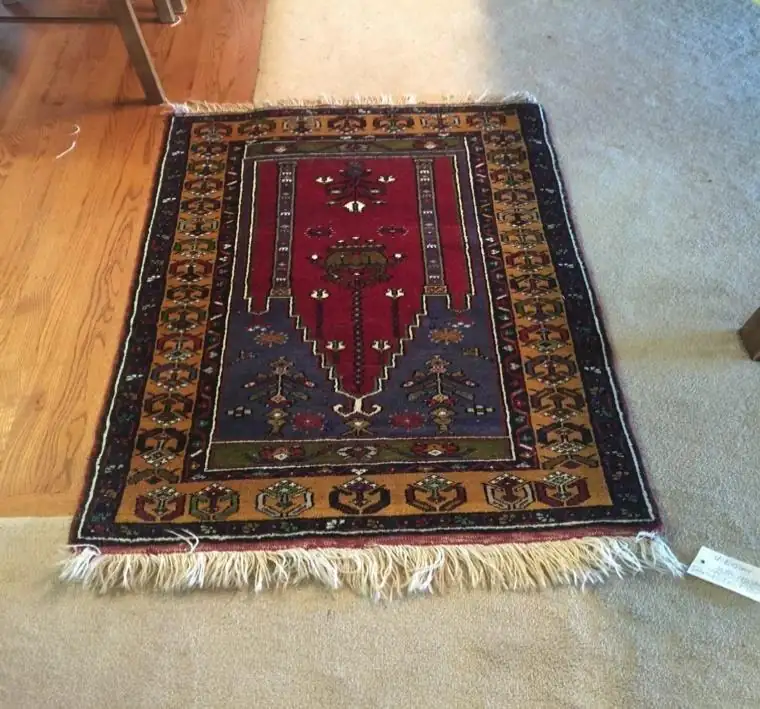
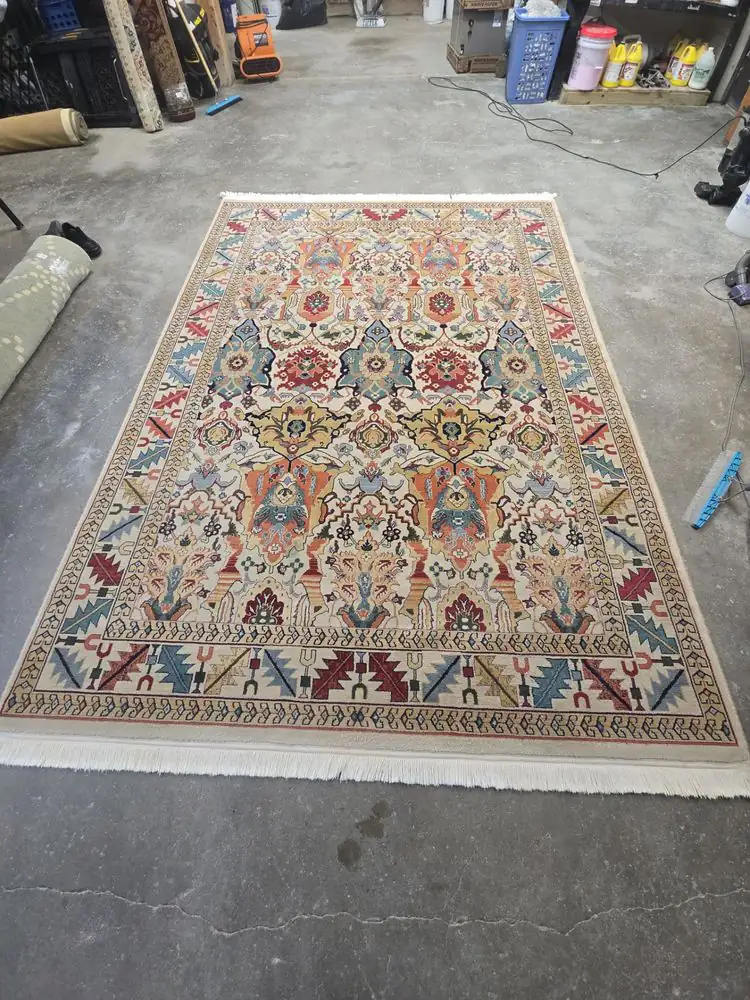
- Hand-knotted Persian rugs
- Oriental and tribal rugs
- Wool pile rugs
- Silk and silk-blend rugs
- Rayon/viscose (“art silk”) rugs
- Antique and heirloom rugs
- Rugs with bleeding or unstable dyes
- Wall-hung rugs and textiles
Good to know
Why do you test the dyes before washing?
Because some colors move when they get wet, and once red bleeds into cream it’s hard to undo. We check every color for crocking or bleeding first. A shaky dye may get our mordant blend, which helps it bite into the yarn. If colors can’t be controlled wet, a poultice soaks them up during drying so they don’t travel.
Looking after a wool or silk rug until it comes in
- Blot a fresh spill with a dry white towel. Press down; don’t rub.
- Keep peroxide, bleach and store-bought urine sprays off wool and silk. They can strip color.
- Lift the corners and check the back for bare spots, eggs or tiny larvae.
- Jot down what you know: where the rug came from, how old it is, any past cleanings.
- Call (573) 817-2540 or book online to set up a drop-off or a pickup.
Worth knowing
What eats holes in a wool rug?
Larvae, not the adult moths you see flying. The University of Missouri Extension guide on carpet beetles and clothes moths says the caterpillar stage is what damages wool, fur, silk and feathers, and carpet beetle larvae eat almost anything of animal origin. Wool is protein, and the larvae need protein to grow up.
2 + 2moth and carpet beetle types that attack wool (rug handout)
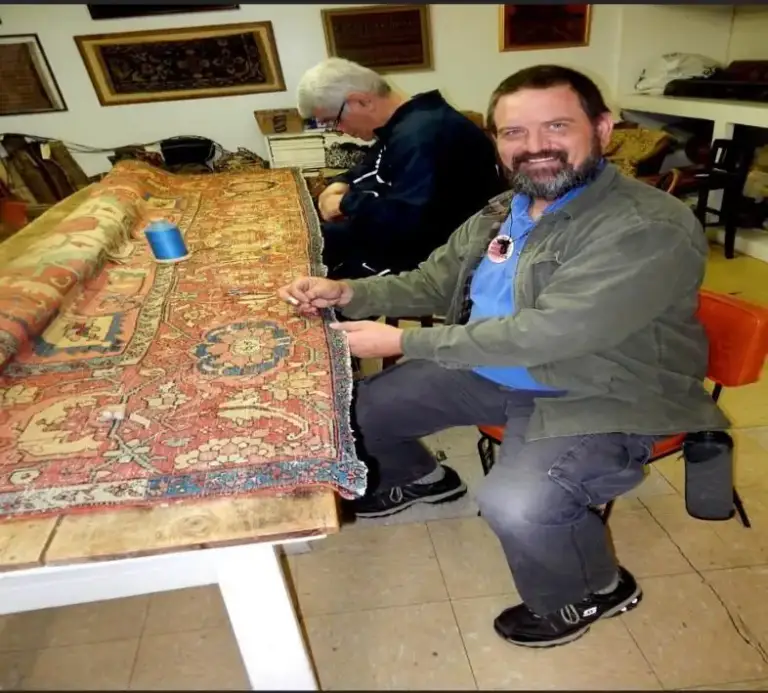
Rob puts it simply: wool is protein and cotton is sugar. Moth larvae want protein, so they’ll eat every bit of wool in a knot and leave the cotton warp right beside it alone. That’s how a rug ends up with bare threads where the pile used to be. The MU guide adds that the varied carpet beetle is the one found most often in Missouri. After a full wash we can apply a moth resistance coating that makes wool taste bad to them. It lasts 10 years or until the next full wash.
Our process
How we wash a wool or silk oriental rug
- IdentifyFiber, construction and age noted, with photos of every stain and worn spot.
- Test the dyesEach color checked for crocking or bleeding before water touches the rug.
- Set or guardA mordant to help dyes bite, or a poultice planned for the drying stage.
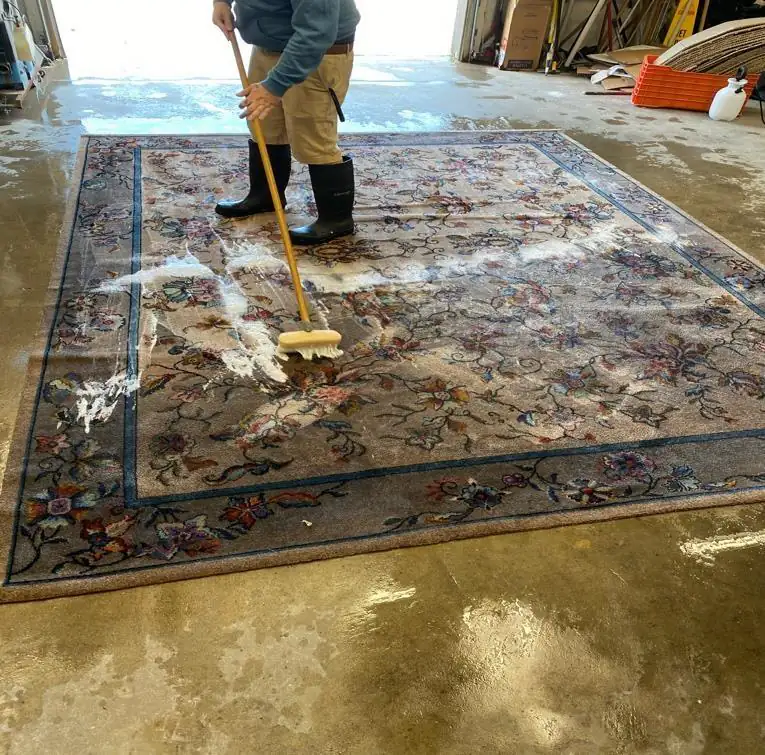
- Wash by fiberA wool, silk or cotton shampoo, worked in gently and rinsed away river style.
- Balance and drypH left on the acid side for wool, then groomed and dried in the dry room.
Watch it
Watch the dry soil come out
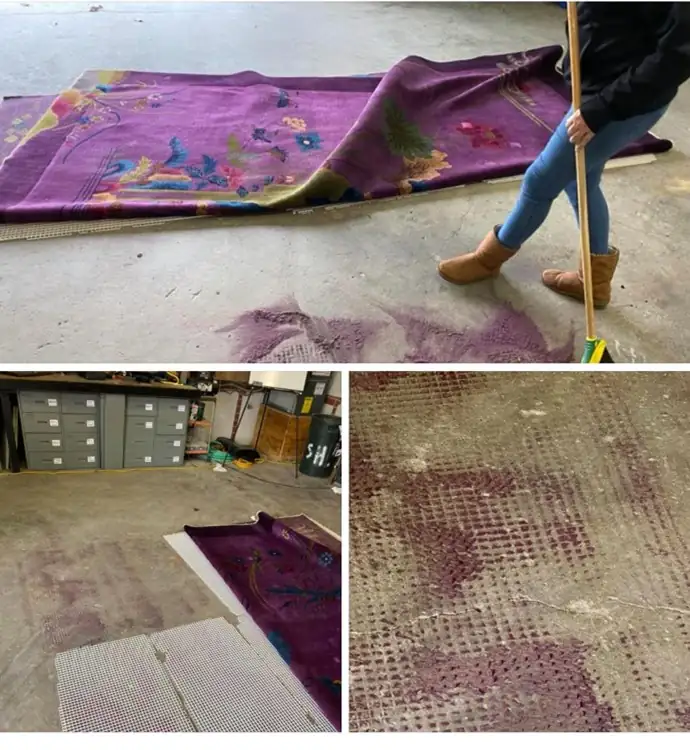
A one-minute clip from the rug studio. Forced air blows out the fine, silty grit a vacuum and the vibrating grid leave behind, so it isn’t turned into mud when the wash starts.
Pricing
What does it cost to clean an oriental rug?
Each rug is priced on its own. Size, fiber, age and condition all count, and so does what the dye tests show, since a mordant or poultice drying adds work. Moth coating, keratin, protectant, repairs and appraisals are separate choices. Call (573) 817-2540, book online, or carry the rug into the studio for a look and a quote.
From a customer
What do owners of Persian and wool rugs say about us?
That Rob explains what he’s doing and why. Elizabeth Case called him “Very helpful with technical explanations for various choices presented for rug cleaning and repair.” Ruthie Morgan wrote about her “treasured family oriental rug,” and Jennifer James said the team knows “how to remove stains with the appropriate treatments to avoid damaging the fibers.”
“Knowledgeable. Professional. Transparent. Very helpful with technical explanations for various choices presented for rug cleaning and repair. Fair and honest in my experiences with Rob. I would definitely recommend to anyone with valuable rugs to clean and preserve.”
FAQ
Oriental and Wool Rug Questions We Hear at the Counter
Is my rug a real hand-knotted Persian, or is it machine made?
Bring it in and we’ll tell you. Fiber ID and a look at how the rug was built are part of every inspection. If you want to know more, we also do informal appraisals: what the rug is, its background, its current retail price, and a short history of the culture it came from.
My Persian rug isn't square. Did something go wrong?
Probably not. A hand-knotted rug wasn’t square when it was cut from the loom, and it shouldn’t be now. Some are woven on horizontal looms, where the weaver may sit on the finished part to keep working. Uneven shrinking between the yarns in a rug can pull it out of line too. If yours won’t lie flat, ask about blocking in the dry room.
Can you clean a silk or viscose rug? Mine has a stain.
Yes, with care. Silk and rayon/viscose, sometimes sold as art silk, are thin fibers that need grooming while they dry so the pile sets the right way. Every rug technician here has been trained, tested and approved to work on both. Some stain treatments carry a risk to fibers or dyes, so we never use one without explaining it and asking you first.
My grandmother's wool rug feels dry and brittle. Can it be saved?
Often there’s something we can do. We have a keratin treatment for sentimental or investment-grade wool and silk that has dried out with age or sun, and it puts moisture back into the fiber. First comes an inspection, since an old rug may need gentle dusting or repairs. Afterward, a protectant with a UV blocker helps slow fading.
What does WoolSafe Approved Service Provider mean for my rug?
It means every rug technician at our studio has been trained, tested and approved to work on wool, silk, cotton, sisal, jute, leather and pelts, rayon/viscose and other unusual fibers. The cleaning agent worked into a wool rug is WoolSafe approved as well. You can read about the program at woolsafe.org.
Service area
Can I bring an oriental rug in from out of town?
Yes. The studio at 1218 Clinkscales Rd in Columbia serves Jefferson City, Fulton, Mexico, Moberly, Boonville and the towns in between. Carry your rug in Monday to Friday, 8 to 5, or on a Saturday by appointment, or call (573) 817-2540 to ask about pickup and delivery.
Related services
Other care for fine rugs
Talk to Rob's team
Have a Persian, oriental or wool rug that needs care?
Call (573) 817-2540 or book online. Tell us what you know about the rug, and we’ll start with a full inspection and talk the plan over with you.